
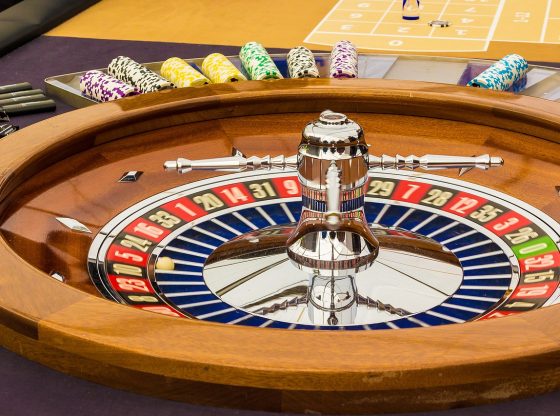

Understanding Roulette odds and probabilities is the foundation of becoming a successful casino player in 2026. While the spinning wheel may seem like a pure game of chance, beneath the surface lies a deep mathematical framework. By mastering Roulette odds and probabilities, you transition from relying purely on luck to making mathematically sound decisions that protect your bankroll and maximize your entertainment value.
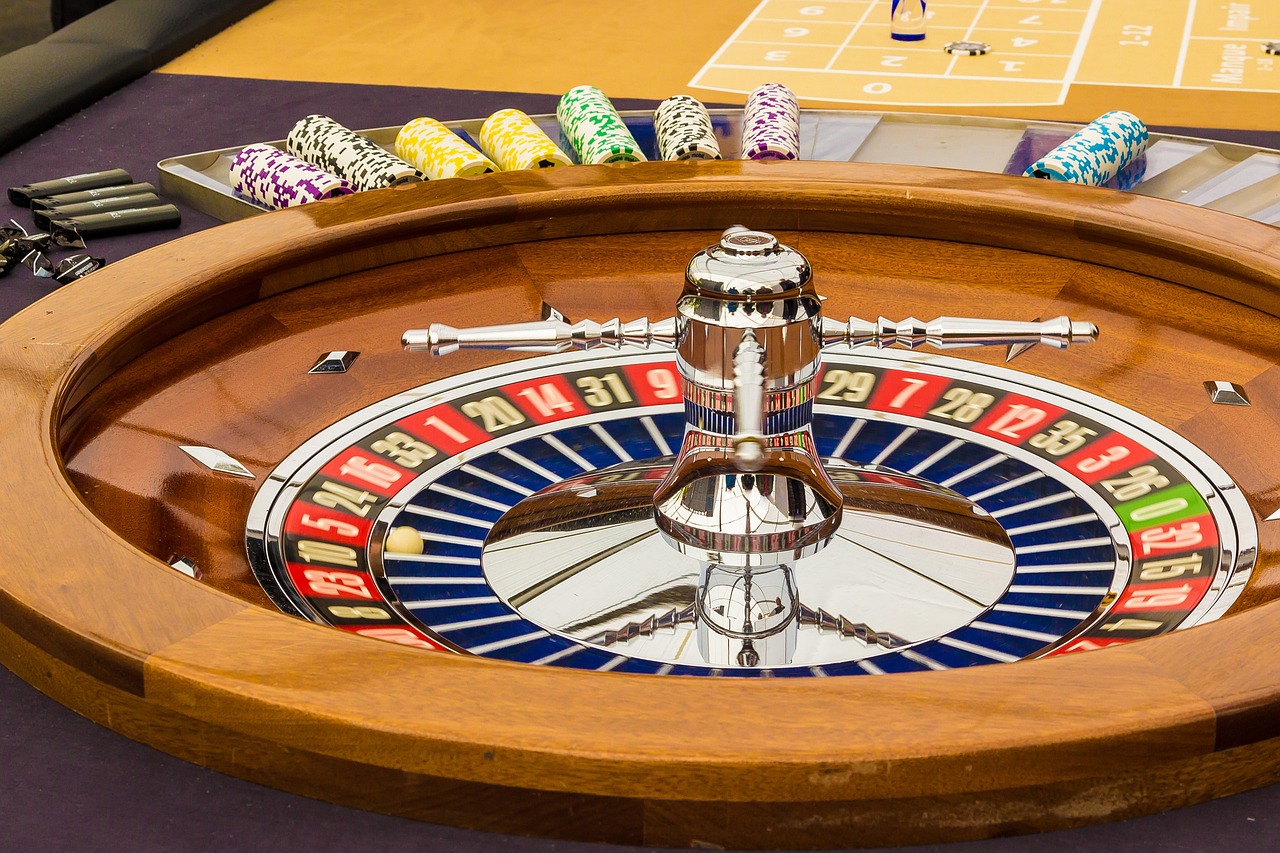
In this comprehensive 2026 guide, we will break down every aspect of the game. From the differences between wheel layouts to the impact of modern multipliers, analyzing Roulette odds and probabilities will give you the definitive edge required for responsible and informed play.
Quick Summary
- Mastering Roulette odds and probabilities requires understanding the fundamental house edge.
- European Roulette offers a 2.70% house edge, while American Roulette jumps to 5.26%.
- French Roulette with the ‘La Partage’ rule offers the best mathematical advantage at 1.35%.
- No betting system can overcome the game’s built-in negative expectation in the long run.
- 2026 live dealer variants introduce massive multipliers but alter traditional base payouts.
Key Facts
| Feature | European Roulette | American Roulette | French Roulette (La Partage) |
|---|---|---|---|
| Total Pockets | 37 (1-36, 0) | 38 (1-36, 0, 00) | 37 (1-36, 0) |
| House Edge | 2.70% | 5.26% | 1.35% (on even-money bets) |
| Base RTP | 97.30% | 94.74% | 98.65% (on even-money bets) |
| Straight-Up Probability | 2.70% (1 in 37) | 2.63% (1 in 38) | 2.70% (1 in 37) |
Overview
When we examine Roulette odds and probabilities, we must first recognize that the game is a series of independent events. This means that every single spin of the wheel is statistically unrelated to the previous one. The ball has no memory, and the wheel does not keep track of past results. The core of Roulette odds and probabilities lies in the physical layout of the wheel and the mathematical advantage built into the payouts by the casino.
Analyzing Roulette odds and probabilities across different variations reveals why European wheels are universally considered superior by professional players. In European Roulette, the wheel features numbers 1 through 36 and a single green zero, totaling 37 pockets. The payout for a winning single number is 35 to 1, but the true odds of hitting it are 36 to 1, creating a house edge of 2.70%. In contrast, American Roulette adds a double zero (00) pocket, creating 38 total pockets. The payout remains 35 to 1, but the true odds become 37 to 1, which nearly doubles the house edge to a steep 5.26%.
Understanding this fundamental difference is the first step in mastering the game in 2026. Choosing the right wheel is the most impactful decision a player can make before placing a single chip on the felt.
How to Play
To leverage Roulette odds and probabilities effectively, players must understand the betting table and the various wagers available. Bets are broadly categorized into ‘Inside’ and ‘Outside’ bets, each offering a drastically different risk-to-reward ratio.
Inside Bets
Inside bets are placed directly on the numbers or the lines between them. These wagers offer a different spectrum of Roulette odds and probabilities compared to outside bets, characterized by high volatility and large payouts. Calculating Roulette odds and probabilities for a straight-up bet (a single number) shows a 2.70% win chance on a single zero wheel, with a massive 35:1 payout. Other inside bets include the Split (two numbers, 17:1 payout, 5.41% probability), the Street (three numbers, 11:1 payout, 8.11% probability), the Corner (four numbers, 8:1 payout, 10.81% probability), and the Line (six numbers, 5:1 payout, 16.22% probability). These bets are ideal for players seeking the thrill of a big win, but they require a larger bankroll to sustain the inevitable losing streaks.
Outside Bets
When evaluating Roulette odds and probabilities, outside bets like Red/Black, Odd/Even, and High/Low provide a much higher win frequency. These are known as even-money bets, paying 1:1. On a European wheel, the probability of winning an even-money bet is 18/37, or 48.65%. The presence of the green zero prevents it from being a true 50/50 coin flip. Other outside bets include Dozens and Columns, which cover 12 numbers each, paying 2:1 with a win probability of 32.43% on a European wheel. These wagers offer lower volatility and are the foundation of most strategic play.
Betting Systems
Many players try to beat Roulette odds and probabilities using progressive betting systems. The most famous is the Martingale system, which dictates that a player should double their bet after every loss on an even-money wager. The theory is that the first win will recover all previous losses plus a profit equal to the original stake. However, no system can alter the fundamental Roulette odds and probabilities programmed into the game’s math. The Martingale carries an extreme risk of hitting table limits or completely depleting a bankroll during a long losing streak. More conservative systems, like the D’Alembert (increasing bets by one unit after a loss and decreasing by one after a win) or the Fibonacci (using a mathematical sequence to determine bet sizes), offer a safer middle ground but still cannot overcome the house edge.
The Gambler’s Fallacy
Ignoring the reality of Roulette odds and probabilities often leads to the Gambler’s Fallacy. This is the psychological trap where a player believes that a certain outcome is ‘due’ to happen because it hasn’t occurred recently. For example, if the ball lands on red five times in a row, a novice might heavily bet on black, assuming it must hit. In reality, the probability of black hitting on the sixth spin remains exactly 48.65% (on a European wheel). Recognizing this fallacy is crucial for maintaining discipline at the tables in 2026.
Bonus Features
In 2026, modern variations have introduced exciting new layers to traditional Roulette odds and probabilities. The industry has seen a massive shift toward ‘Live Dealer’ roulette, which combines the convenience and digital interfaces of online play with the trust and transparency of physical, mechanical wheels spun by human croupiers in real-time.
Furthermore, games like Lightning Roulette and Quantum Roulette drastically alter standard Roulette odds and probabilities by adding random multipliers to the game. In these popular formats, before every spin, lightning strikes between one and five numbers, assigning them multipliers ranging from 50x to 500x. If a player has a straight-up bet on a struck number and it wins, they receive the multiplied payout.
However, casinos do not give away value for free. These bonus features mean that calculating Roulette odds and probabilities requires factoring in modified base payouts. To compensate for the massive multipliers, the standard payout for a non-multiplied straight-up win is often reduced from 35:1 to 29:1. This adjustment can actually increase the overall house edge if a player does not employ a strategy that maximizes their exposure to the multiplier numbers. Understanding this trade-off is essential for anyone playing these high-volatility live casino games in 2026.
RTP/Volatility
A deep dive into Roulette odds and probabilities is incomplete without discussing Return to Player (RTP) and volatility. RTP is the theoretical percentage of all wagered money that a game will pay back to players over time. As established, the RTP for standard European Roulette is 97.30%, while American Roulette sits at an inferior 94.74%.
The most favorable Roulette odds and probabilities are found in French Roulette games that utilize the ‘La Partage’ or ‘En Prison’ rules. Under the La Partage rule, if a player makes an even-money outside bet (like Red or Black) and the ball lands on the green zero, the player receives half of their original stake back. This simple rule effectively cuts the house edge on even-money bets in half, reducing it to an incredibly player-friendly 1.35%, and boosting the RTP for those specific wagers to 98.65%. Whenever you have the choice in 2026, French Roulette should be your primary destination.
Comparing Roulette odds and probabilities to other classic casino games like Blackjack and Baccarat highlights the mathematical differences in casino gaming. Blackjack, when played with perfect basic strategy, offers an RTP that can exceed 99%, making it mathematically superior for long-term bankroll preservation. Similarly, betting on the Banker in Baccarat yields an RTP of approximately 98.94%. Despite these figures, roulette remains a massive favorite globally due to its social atmosphere, the sheer variety of betting options, and the unmatched thrill of hitting a 35:1 straight-up winner. By understanding the volatility—high for inside bets, low for outside bets—players can tailor their sessions to match their personal risk tolerance and entertainment goals.
FAQ
Q: What is the best way to improve my Roulette odds and probabilities?
Q: Can a betting system beat the house edge in 2026?
Q: How do multipliers affect Roulette odds and probabilities in 2026?
What Readers Are Saying
Really enjoyed reading this. Finally a guide that explains side bets clearly. Very helpful for beginners. Decent guide, covers the basics well.
Exactly what I needed. Switched to this platform after reading the review. The dealers are very professional. Worth your time for sure.
Great article! Baccarat odds are well explained. I've been using this strategy for two weeks now. Solid 4 out of 5.
Solid write-up. The real-time stats feature mentioned here really helps with decision-making. Decent guide, covers the basics well.